


Swim Spa Planning Permission UK: Do You Need It?

Many people dream of having their own swimming pool but are put off by the sheer scale of the project, the massive costs, and the inevitable planning headaches. That is why so many homeowners in Oxfordshire are turning to swim spas instead.
A swim spa gives you the ability to swim continuously against a powerful current, while taking up a fraction of the space of a traditional pool. But before you start measuring your garden, the first question that usually comes to mind is: "Do I actually need planning permission for a swim spa?"
It is a question we answer every week at Hot Tubs Oxfordshire. The good news is that, in most cases, the answer is no. However, because swim spas are larger and heavier than standard hot tubs, and are often sunken into the ground, there are some important exceptions and installation rules you need to know about.
This article explains the UK planning rules for swim spas clearly, covers the differences between above-ground and in-ground installations, and helps you feel confident about moving forward with your project.
The Short Answer
For the vast majority of UK homeowners, you do not need planning permission to install a swim spa in your garden. Under UK planning law, a domestic swim spa is generally treated as a portable, temporary structure that is incidental to the enjoyment of your home.
This means it falls within your permitted development rights, in much the same way as a hot tub, a garden shed, or a summerhouse. No formal application to the local council is required.
However, the rules can change depending on how you choose to install the swim spa (particularly if you want it sunken into the ground), what structures you build around it, and whether your property has specific planning restrictions.
When You Might Need Planning Permission
In-Ground vs Above-Ground Installation
One of the biggest differences between a hot tub and a swim spa is how people choose to install them. Because swim spas are tall (often around 1.3 to 1.5 metres high), many homeowners prefer to sink them partially or fully into the ground to make access easier and to blend them into the garden landscape.
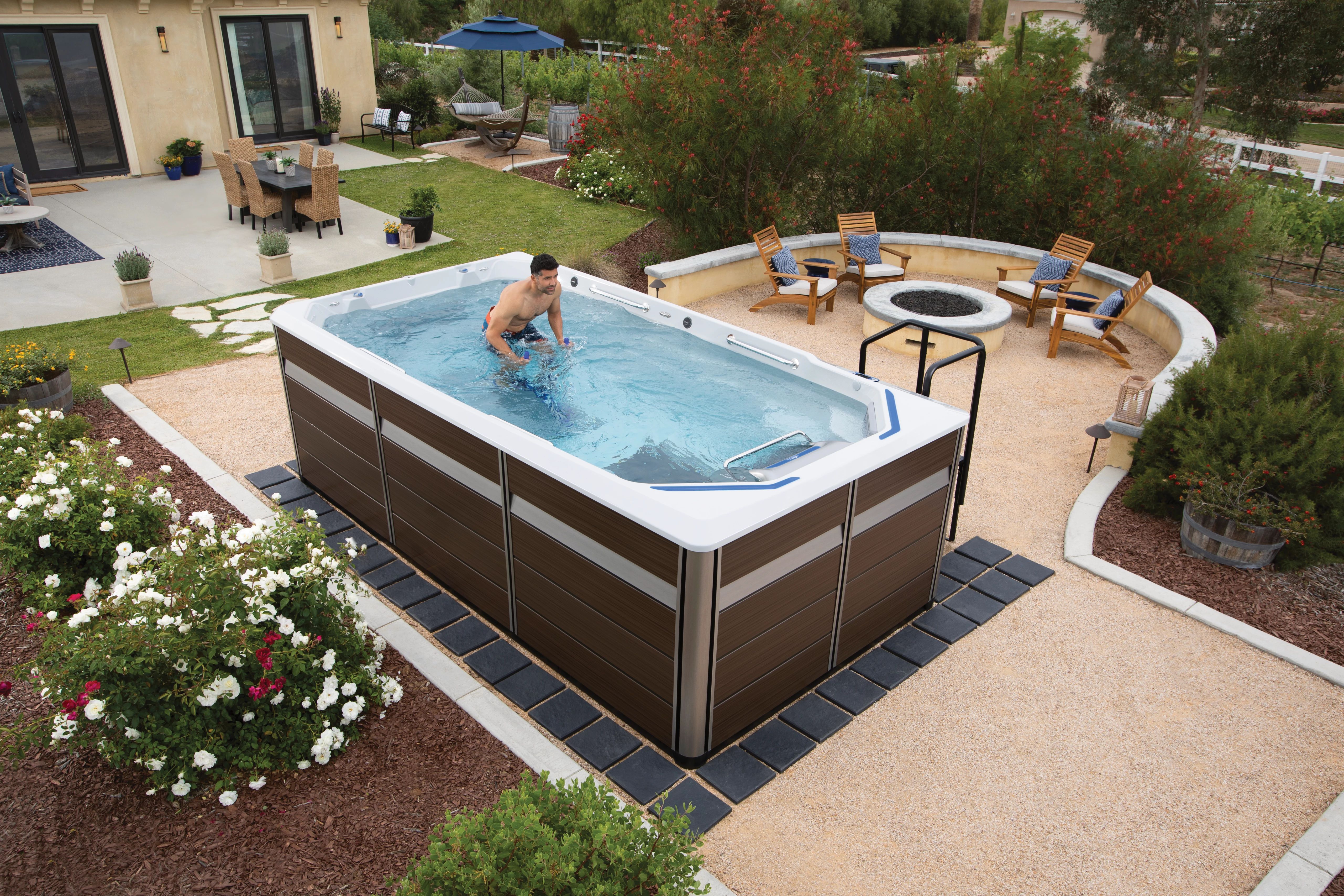
Above-Ground: If you simply place the swim spa on a concrete base above ground, it is almost always classed as permitted development.
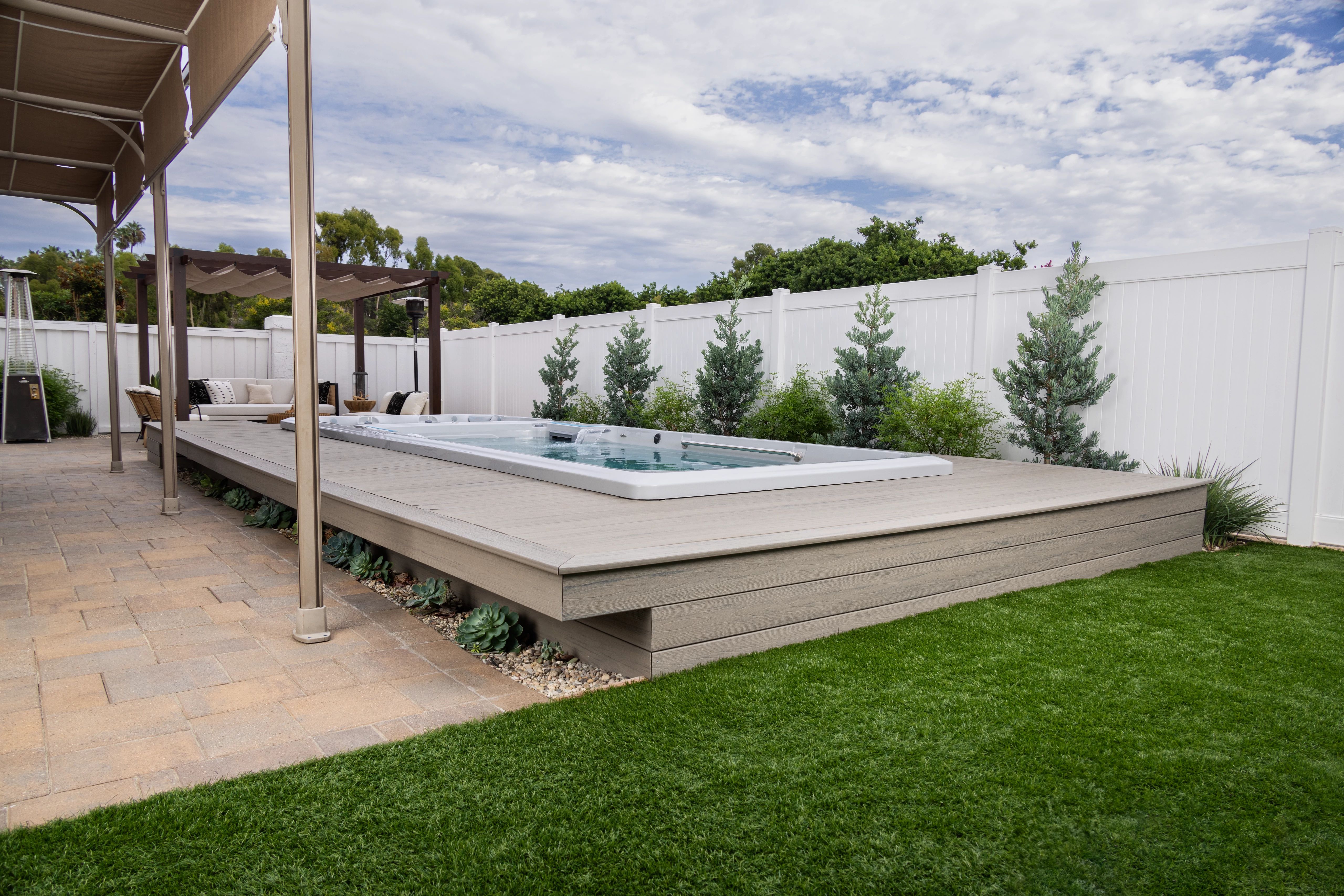
In-Ground: Sinking a swim spa requires significant excavation, the construction of a concrete pit, and retaining walls. While an in-ground swim spa is less visually intrusive, the sheer scale of the engineering work involved means that some local councils may view it as an "engineering operation" rather than a temporary structure.
In many cases, an in-ground swim spa will still fall under permitted development, but because of the groundwork involved, it is recommended that you check with your local planning authority before you start digging.
Living in a Listed Building or Its Curtilage
If your home is a listed building, or if your property sits within the curtilage of one, your permitted development rights are severely restricted. There are no permitted development rights within the curtilage of a listed building, which means any new structure—including a swim spa—will require planning permission. You may also need Listed Building Consent.
Oxford City Council and other local authorities in the area enforce this strictly to protect the historic character of listed properties.
Living in a Conservation Area, National Park, or AONB
Oxfordshire is home to many beautiful conservation areas and parts of the Cotswolds Area of Outstanding Natural Beauty (AONB). If you live in one of these designated areas, your permitted development rights are more limited.
A swim spa placed in the back garden will often still be permitted, but if you plan to install it to the side of your property, or if you are building a large enclosure around it, you will likely need planning permission.
Decking, Gazebos, and Garden Rooms
Often, it is not the swim spa itself that triggers a planning requirement, but the structures built around it.
- Decking: If you are building a raised deck around your above-ground swim spa to make access easier, the height of that deck matters. Decking that is more than 30cm above ground level can require planning permission, especially if it allows you to overlook neighbouring gardens.
- Enclosures: If you plan to build a permanent gazebo, pergola, or garden room over your swim spa, this structure must comply with the rules for outbuildings. It must be single-storey, have a maximum overall height of 4 metres for a dual-pitched roof (or 3 metres for a flat roof), and have a maximum eaves height of 2.5 metres. If the structure is within two metres of your boundary, the maximum permitted height for the entire building drops to 2.5 metres.
Installation and Building Regulations
While you may not need planning permission, installing a swim spa is a significant undertaking that requires careful preparation.
The Base
A swim spa holds thousands of litres of water and can weigh up to ten tonnes when full. It cannot be placed on grass, gravel, or standard paving slabs. You will need a completely level, steel-reinforced concrete pad that is at least 4 to 6 inches thick. If you are sinking the spa into a pit, the pit must have adequate drainage to prevent groundwater from flooding the equipment compartment.
Electrical Requirements (Part P)
Your swim spa installation must comply with building regulations, specifically Part P, which covers electrical safety in dwellings. Swim spas require a substantial electrical supply—usually a 32-amp or 45-amp dedicated hard-wired connection, depending on the model and the number of pumps.
This work must be carried out by a qualified, registered electrician in compliance with BS 7671 wiring regulations. They will provide you with an electrical installation certificate upon completion.
Access and Delivery
Unlike a traditional pool that is built on-site, a swim spa is delivered fully assembled. Because of their size and weight, delivery usually requires a crane to lift the spa over your house or walls and safely into the garden. When planning your installation, you must factor in the cost and logistics of a crane lift.
Getting Peace of Mind: The Lawful Development Certificate
If you are planning a complex installation—such as fully sinking the swim spa or building a large deck around it—and you want absolute certainty that your project is lawful, you can apply to your local planning authority for a Lawful Development Certificate (LDC).
This is a formal document that proves your swim spa installation did not require planning permission. It is particularly useful to have on file if you ever decide to sell your property.
Common Mistakes to Avoid
Underestimating the groundwork. If you are sinking your swim spa, do not underestimate the cost and complexity of building the pit. It requires proper retaining walls, a reinforced base, and, crucially, excellent drainage. A flooded pit will destroy the swim spa's pumps and electronics.
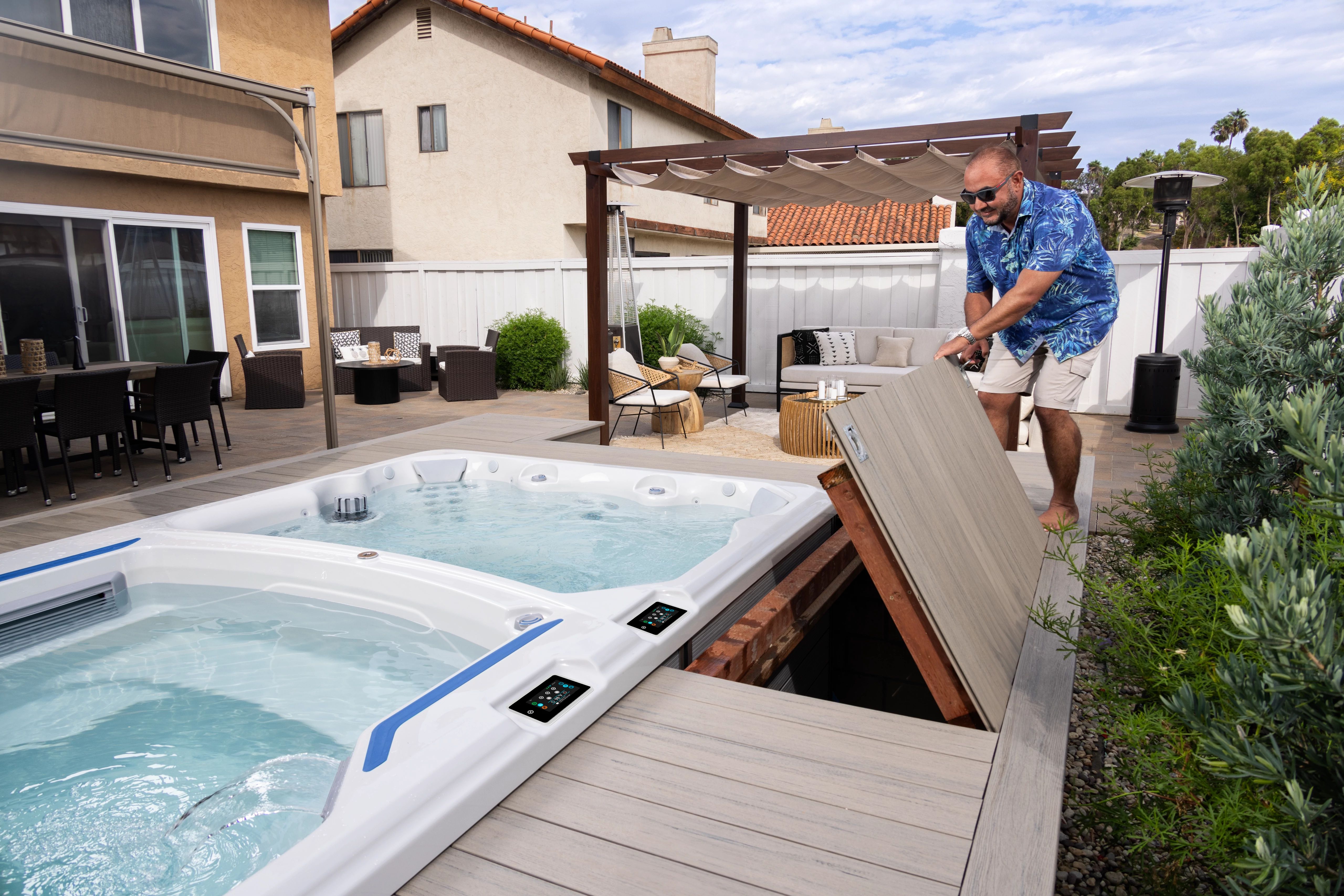
Forgetting about access for servicing. If you sink your swim spa or build decking right up to the edges, you must leave removable access panels. Engineers need access to the equipment bay (usually located at one end of the spa) for routine servicing and repairs.
Not considering the neighbours. A swim spa has powerful pumps that generate noise. While modern premium swim spas are well-insulated and relatively quiet, placing the equipment end of the spa right against a neighbour's fence is a recipe for complaints. Think carefully about positioning.
Choosing a cheap base. Trying to save money by putting a swim spa on an inadequate base will lead to disaster. If the base cracks or sinks under the immense weight, the acrylic shell of the swim spa can warp or crack, completely voiding your warranty.
Frequently Asked Questions
Can a swim spa be installed indoors? Yes. Many homeowners install swim spas inside a large garage, outbuilding, or purpose-built garden room, which can reduce running costs and guarantee year-round use regardless of the weather.
Can a swim spa be used all year round in the UK? Absolutely. Unlike a traditional outdoor pool, a swim spa is fully heated and insulated, meaning you can use it comfortably throughout autumn and winter. A well-insulated model will maintain its temperature efficiently even in cold weather, making it a genuinely year-round investment.
How much space do I need for a swim spa? Swim spas typically range from 4 metres to 6 metres in length, and are around 2.3 metres wide. You must also allow at least half a metre of clearance around the sides for safe access and future maintenance.
Can a swim spa replace a swimming pool? Yes. For many families, a swim spa is a much better option. It takes up less space, costs significantly less to install and heat, can be used all year round, and still provides an excellent swimming and fitness experience.
Do I need an electrician to install a swim spa? Yes. A swim spa requires a heavy-duty, dedicated electrical supply that must be installed by a qualified, registered electrician in compliance with Part P building regulations.
What access is required if I sink a swim spa? If you sink your swim spa either fully or partially into the ground, you must build in removable access panels or hatches on at least one side of the pit, typically at the equipment end of the spa. Engineers need clear, unobstructed access to the pumps, heaters, and control systems for routine servicing and any future repairs. Without adequate access, servicing becomes extremely difficult and costly, and some manufacturers may consider it a breach of warranty conditions. Your installer should plan this into the pit design from the outset.
Key Takeaways
Installing a swim spa is a fantastic way to bring fitness, relaxation, and fun into your garden without the massive disruption of building a traditional swimming pool. For most homeowners in the UK, the process is straightforward and does not require any planning permission at all.
The key is to plan the installation carefully - particularly the concrete base, the electrical supply, and the delivery access. If you are planning to sink the swim spa into the ground, or if you live in a listed building or conservation area, always take advice from your local planning authority before proceeding.
At Hot Tubs Oxfordshire, we specialise in premium swim spas called Endless Pools. We can guide you through every step of the process, from choosing the right model to advising on groundworks, delivery, and installation.
We would love to welcome you to our showroom in Oxfordshire. Come and see our range in person, test out the swim spas on display, and let us help you turn your garden into the ultimate aquatic retreat. Book your showroom visit here.
