


Will a Hot Tub or Swim Spa Annoy the Neighbours?

For many homeowners, there’s a quiet thought that sits just beneath the excitement of choosing a hot tub or swim spa:
“Will this bother the neighbours?”
It’s a fair question. Most people aren’t looking to create noise or tension. They just want to enjoy their garden a bit more.
The good news is that this is rarely an issue in practice. And when it is, it’s usually down to how the space is used, rather than the product itself.
Where problems actually come from
It’s easy to assume that a hot tub or swim spa might be noisy by nature. In reality, most neighbour concerns come down to behaviour.
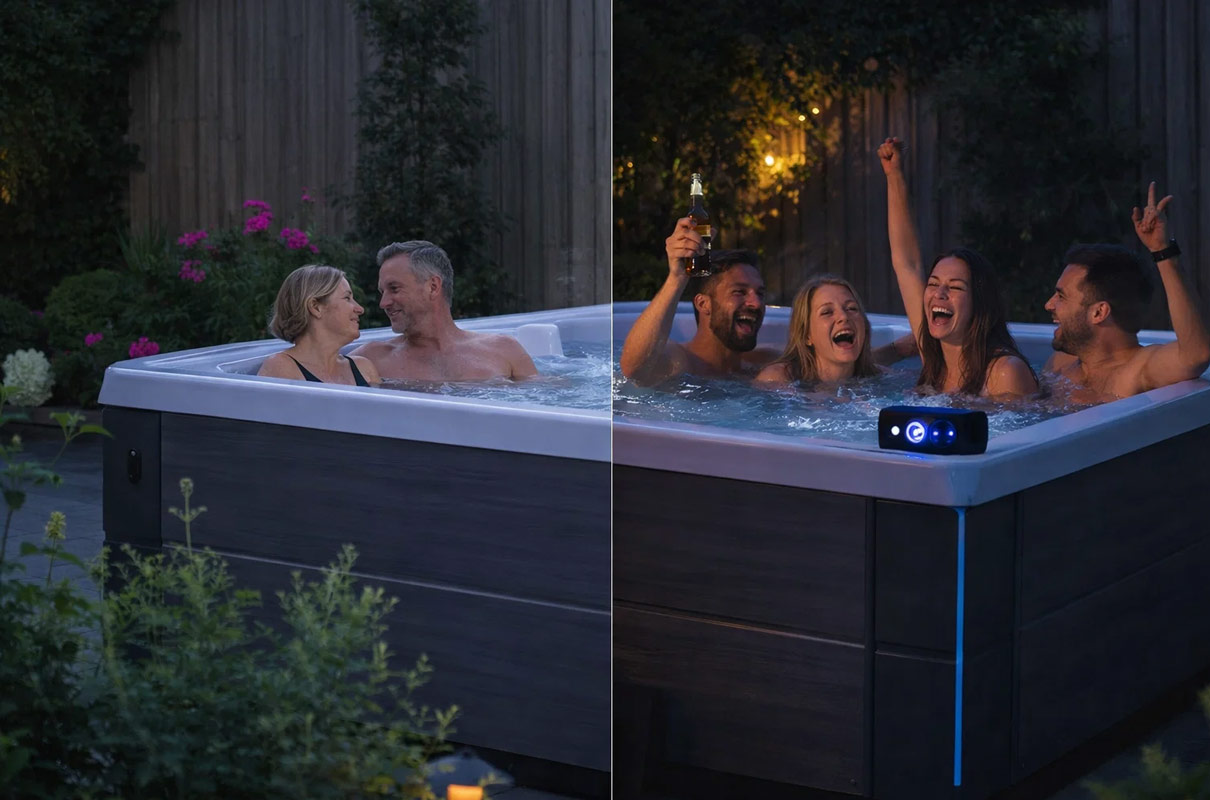
A quiet soak on a weekday evening is very different to a lively late-night session. Voices carry further than people expect, especially in open gardens. Add music or a couple of drinks into the mix, and volume awareness can drift a bit.
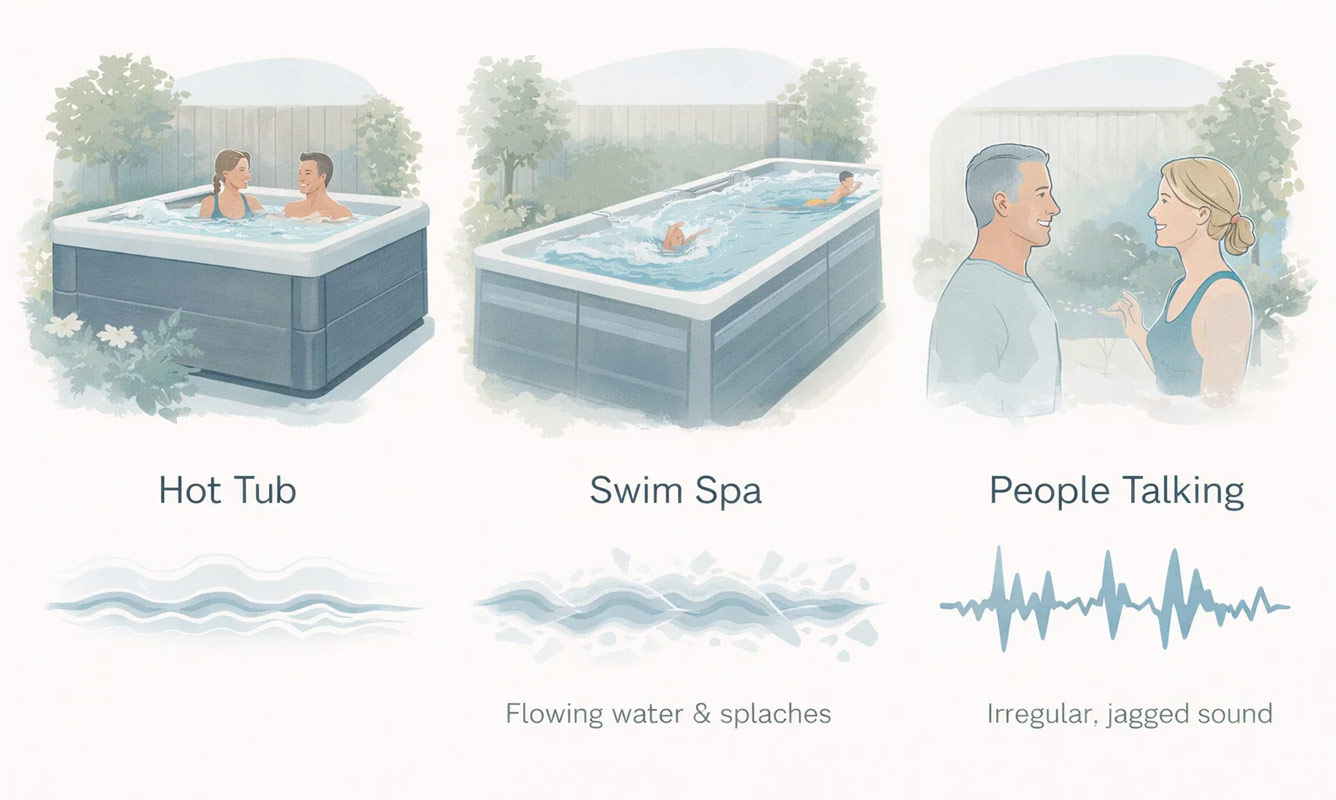
It’s also worth noting that not all noise is equal. A steady background sound tends to fade into the surroundings, whereas irregular noise like conversation, laughter or music is far more noticeable. That broader point is well recognised in environmental noise research, which looks at how people respond not just to volume, but to the character and predictability of sound.
In most cases, it’s not the spa itself that draws attention. It’s what’s happening around it.
What actually makes noise, and what it sounds like
When thinking about noise, it’s not just about how loud something is, but what kind of sound it is.
Hot tubs
- Pumps and filtration
These produce a low, steady hum. It’s consistent and predictable, more like distant garden equipment than anything intrusive. - Air blowers
Louder when switched on, but usually used in short bursts rather than continuously. - Overall sound profile
Fairly even and constant, which most people quickly tune out.
Swim spas
- Circulation and jet systems
More powerful than a hot tub, so slightly more noticeable when running at higher settings. - Swim mode
Creates a steady, flowing sound while in use. Audible, but consistent. - Swimming itself
This is where swim spas differ most. Active swimming creates splashing from strokes and kicks, and the harder the effort, the more noticeable it becomes.
In practice, though, this type of sound is usually less intrusive than people expect. It is closer to the sound of moving water than anything sharp or mechanical, and it typically happens in shorter sessions rather than continuously. That matters, because people tend to react more strongly to sudden or irregular sounds than to steady, water-based background noise.
People
This is the most variable part.
- Conversations, laughter and music travel more easily than you might think
- These sounds are less predictable and more likely to catch attention
- Late evening use naturally makes them more noticeable
The key takeaway
A steady, water-based sound tends to blend into the background. Sudden or irregular noise stands out.
In most situations, it’s the human element that makes the difference.
A quick word on “reasonable use” in the UK
In the UK, the idea of reasonable use is what matters most when it comes to noise. That doesn’t mean silence. It simply means being mindful of timing and impact.
In practice, earlier evening use is rarely an issue, while late-night noise is far more likely to be noticed. Irregular or disruptive sounds also tend to matter more than steady background noise. Councils in England are required to investigate complaints that could amount to a statutory nuisance, but that is generally about persistent and unresolved disturbance rather than occasional, everyday use.
For the vast majority of homeowners, it never gets anywhere near that point.
Setting yourself up for success
A bit of thought at the planning stage goes a long way.
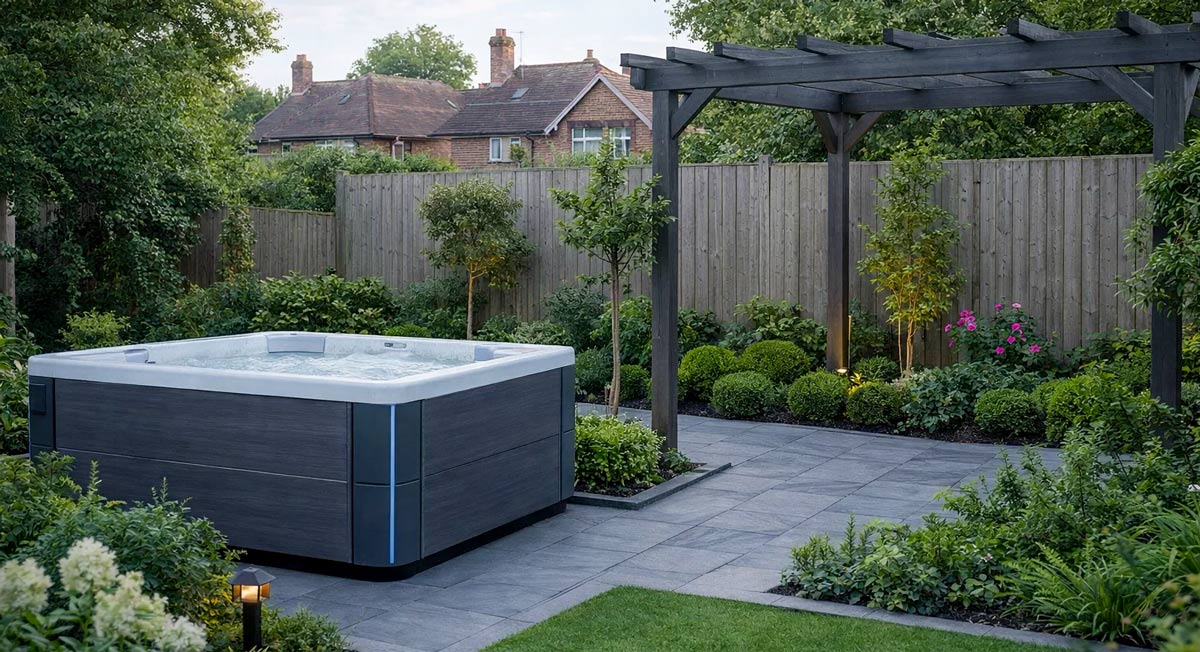
- Positioning
Avoid placing your hot tub or swim spa right up against a boundary or directly beneath a neighbour’s window if possible. - Distance and layout
Even a small shift in location can reduce how noticeable sound is beyond your garden. - Screening
Fencing, planting or pergolas can help soften how sound travels, not just reduce volume, but change how it is perceived. - Orientation
Think about where people will naturally sit and face. Directing activity away from neighbouring spaces can make a subtle but meaningful difference.
It’s not about hiding anything, just being thoughtful about how your space works.
The human element: a little communication goes a long way
One of the simplest and most effective things you can do is mention it to your neighbours before installation.
Nothing formal, just a quick conversation:
“We’re putting a hot tub” or “We’re putting a swim spa in. If it ever causes any issues, just let us know.”
It sets the tone early, removes any element of surprise, and shows consideration from the outset.
Most people appreciate that.
If something does come up
On the rare occasion a concern is raised, it’s usually straightforward to resolve.
The key is to keep things calm and practical.
In most cases, it comes down to small adjustments:
- finishing a bit earlier
- lowering voices or turning music off
- being mindful of how the space is used in the evening
It is rarely about the spa itself, and more about the type of noise around it.
A simple tweak is often all that’s needed.
The reality: most people never have an issue
For the vast majority of owners, this never becomes a problem.
Hot tubs and swim spas are designed for regular use, and the sound they produce is generally steady and predictable. It tends to blend into the background of everyday garden life far more than people expect.
With normal, considerate use, it simply becomes part of how you enjoy your space.
Enjoying your space, responsibly
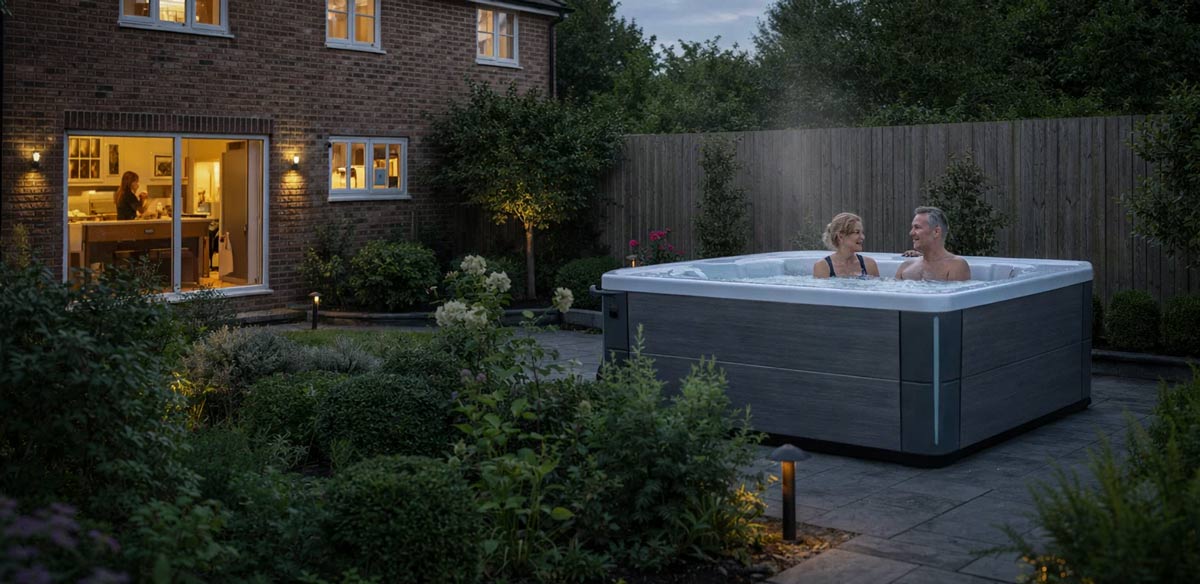
Adding a hot tub or swim spa isn’t about creating disruption. It’s about creating somewhere to relax, unwind, or spend time with family.
Good ownership isn’t about restriction. It’s about awareness.
With a bit of thought around how and when you use it, you can enjoy your garden fully, without it becoming an issue for anyone else.
References

