


How Many Seats Should Your Hot Tub Have?

Seat count is a starting point, not a decision. A hot tub is not a dining table. The number of seats tells you something, but it does not tell you how it will feel to sit in it, how comfortable it will be for your household, or how varied the hydrotherapy experience will actually be.
Choosing the right size means thinking about how you will use it, not just how many spaces it technically offers.
Start With Real Life, Not a Spec Sheet
Before looking at capacities, think about how your hot tub will actually be used.
Is it primarily for two adults at the end of a long workday?
A family with children or teenagers?
Regular hosting and social evenings?
Or recovery after sport and exercise?
A couple who mostly soak together on quiet weekday evenings may not need a seven seat model simply because it exists. A household with teenagers, however, may quickly discover everyone wants in at once.
Buy for your real pattern of use, not your most ambitious scenario.
Capacity Does Not Equal Comfort
Not all six seat hot tubs comfortably fit six adults.
Seat count reflects moulded positions, but that does not account for shoulder width, legroom or footwell design. In some layouts, everyone shares a compact central footwell. In others, the space feels open and generous.
A well designed five seat model can feel more spacious than a tightly configured seven seat alternative. Layout matters more than the headline number.
Body size also plays a role. Taller bathers may need deeper seats to keep their shoulders submerged. Shorter bathers may prefer more upright seating where they can sit securely without floating.
Two models with the same capacity can feel entirely different once you sit in them.
More Seats Can Mean More Hydrotherapy Variety
This is the part many buyers overlook.
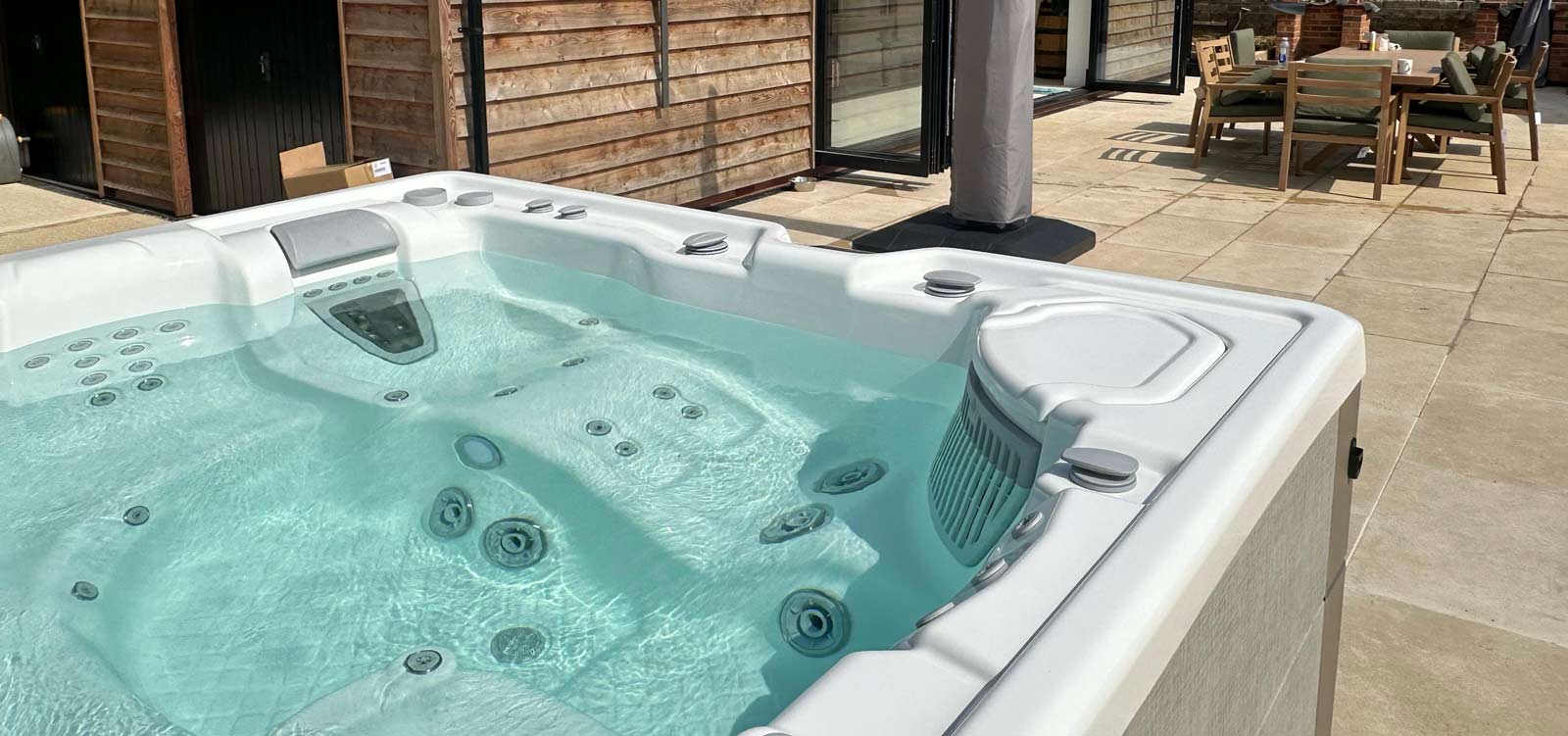
In premium hot tubs, seats are deliberately configured with different jet layouts, targeting different muscle groups.
One seat may focus on upper back and shoulders.
Another might concentrate on the lower lumbar region.
A deeper seat may offer larger jets for a more intensive massage.
A lounger often delivers full length coverage along the back of the body.
Some seats include dedicated calf or foot jets that others do not.
As a result, a larger model can offer a wider range of hydrotherapy experiences, even if you rarely fill every seat at once.
If you move between seats during a soak, you are not simply changing position. You are changing the type of hydrotherapy your body receives.
For a couple using their hot tub for recovery after sport, rotating through several distinct jet configurations may be more valuable than social capacity itself. In that case, a slightly larger model becomes about therapeutic range rather than headcount.
Lounger or No Lounger?
A lounger usually reduces overall seat count by one position, but it often increases full body jet coverage.

For some people, it becomes the most used seat in the tub. For others, depending on height and buoyancy, it is less comfortable.
In mixed height households, combining upright seats with a lounger can provide flexibility. The only reliable way to know how a lounger feels for you is to sit in one.
One Depth Does Not Fit All
Seat depth and positioning matter more than many expect.
Taller bathers often want water to reach the tops of their shoulders without sliding down awkwardly. Shorter bathers may feel overwhelmed in very deep seats and prefer slightly raised positions.
Many premium models incorporate varied seat heights for this reason, allowing different body types to sit comfortably within the same hot tub.
When assessing seat numbers, it is worth asking not just “how many?” but “how usable are they for the people in our household?”
Make Sure It Fits Your Space Properly
Larger capacity tubs usually mean a larger physical footprint.
That affects more than just where it sits. You need to consider:
- Access for delivery and installation
- Clearance for the cover and cover lifter
- Circulation space around the tub
- Visual proportion within your garden
A hot tub should feel integrated into the space, not oversized. Choosing a model that is significantly larger than your typical usage requires can create unnecessary compromises.
Running Costs and Water Volume
Bigger tubs hold more water, which means slightly longer heat up times and marginally higher chemical usage.
In well insulated premium models, the difference in running costs is not dramatic, but it is still worth considering. It makes sense to buy for genuine need rather than theoretical maximum occupancy.
Think Five Years Ahead
Think beyond today.
Teenagers grow. Social habits shift. You may prioritise recovery and relaxation differently as life evolves.
Many households also find that once the novelty settles, regular usage is more routine and intimate than initially imagined.
A well chosen hot tub should still feel appropriate five years from now, not just impressive on day one.
Choose for Experience, Not Just Numbers
Seat numbers make comparison easy. They do not make decisions easy.
Two hot tub models with identical capacity can deliver entirely different experiences. The only reliable way to understand that difference is to sit in them.
The right choice rarely reveals itself on a spec sheet. Time spent sitting in different layouts tends to bring the decision into focus.


