


Infrared vs Traditional Sauna: Which Is Right for You?

If you’re considering a sauna for your home, one key decision you’ll face early on is:
Should you choose an infrared sauna or a traditional sauna?
Both options offer real benefits, but they deliver very different experiences. The right choice depends on how you plan to use your sauna, and what will work best in your space.
In this article, we’re breaking down the key differences to help you make a confident, informed decision.
The Key Difference (In Simple Terms)
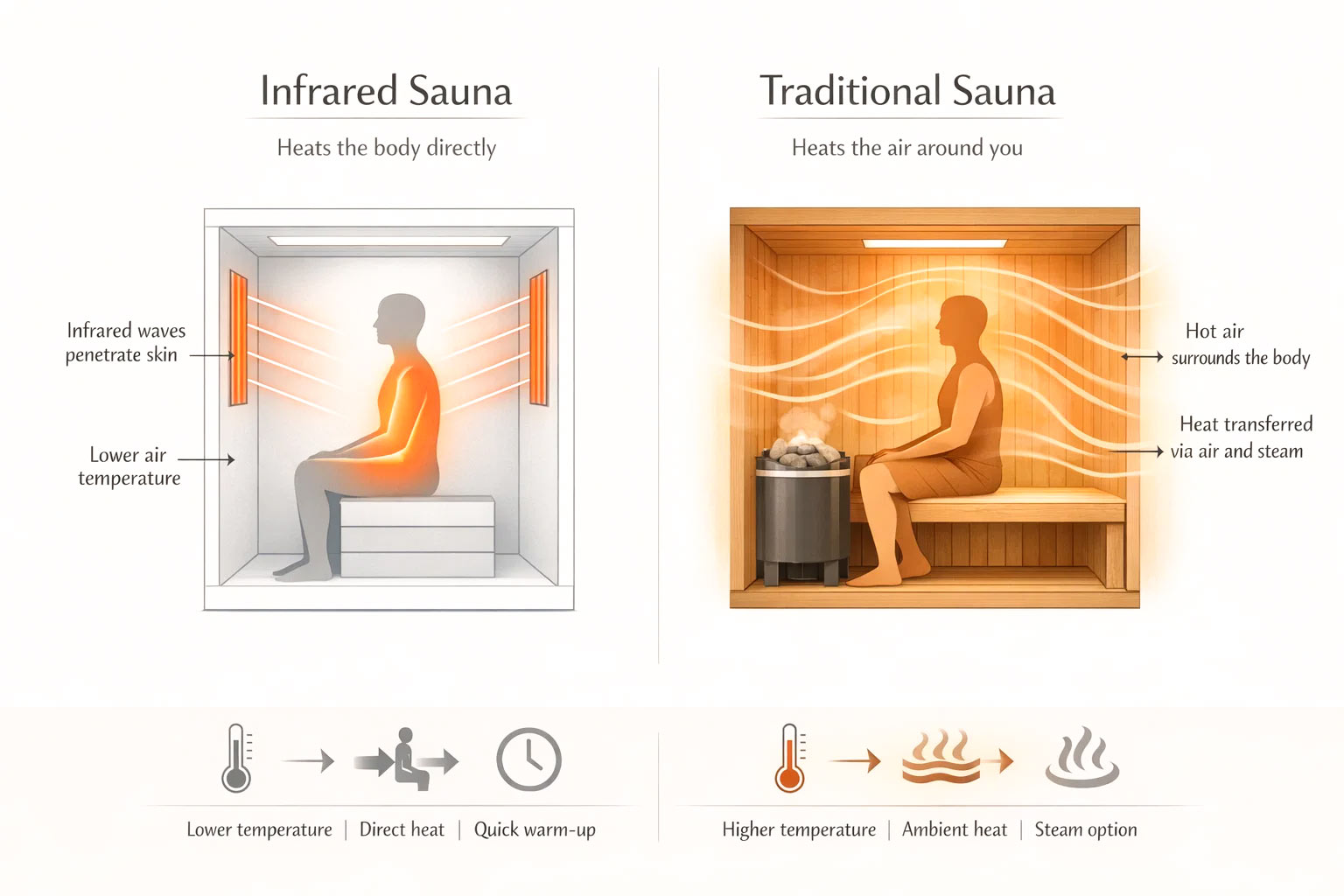
The fundamental difference between the two is how the heat is delivered:
- Infrared saunas use infrared panels to heat your body directly
- Traditional saunas heat the air around you using a heater and (optionally) steam
This difference affects everything else - from temperature and comfort to running costs and overall experience.
How the Experience Feels
Infrared Sauna
Infrared saunas operate at lower temperatures, typically around 40 to 60°C. Instead of filling the space with intense heat, they warm your body more directly, which creates a noticeably gentler environment.
For most people, that means it is easier to stay in for longer. It is often the option people lean towards if they are new to saunas, or if they simply prefer something less intense. They also tend to heat up more quickly, which makes them convenient if you want to use it regularly without much planning.
Traditional Sauna
Traditional saunas are a different experience altogether. Temperatures are much higher, usually somewhere between 70 and 100°C, and the heat comes from the air rather than directly from panels.
This creates the classic sauna environment most people imagine. The heat feels more immersive, and adding water to the heater introduces steam, which changes the atmosphere again. For many people, this is what makes a sauna feel like a sauna.
How People Typically Use Each Type
Both types are used for relaxation and general wellbeing, but people often find themselves naturally drawn to one over the other.
Infrared tends to suit people who want something simple, convenient, and easy to use regularly. It fits neatly into a routine and works well in indoor spaces.
Traditional saunas tend to appeal to those who want a more immersive experience. They are often used for longer, more deliberate sessions, and can feel more like a destination rather than something you quickly dip in and out of.
Installation and Practical Considerations
This is where the differences become more practical.
Infrared saunas are usually simpler to install. Many are designed to fit into existing indoor spaces such as spare rooms or home gyms, and setup tends to be more straightforward.
Traditional saunas require more planning. They need a heater, proper ventilation, and in some cases professional electrical work. If you are installing one outdoors, you may also need to think about a base, weatherproofing, and access.
None of this is a problem when it is planned properly, but it is something to be aware of early on.
Running Costs
Running costs are often one of the biggest concerns, but in practice, they are usually more manageable than people expect.
Infrared saunas generally use less energy and heat up more quickly, so the cost per session tends to be lower. Traditional saunas use more power and take longer to reach temperature, which means they are slightly more expensive to run.
To give a realistic idea of what that looks like:
- Infrared sauna: typically around £0.20 to £0.50 per session
- Traditional sauna: typically around £1 to £3 per session
As our MD, Carla puts it:
“With the saunas we supply and install, most customers are pleasantly surprised by how reasonable the running costs are. When the sauna is properly specified and insulated, it is something people feel comfortable using regularly rather than worrying about switching on.”
The key factor is not just the type of sauna, but the quality of the build and how well it is suited to the space.
Cost Differences
There is also a difference in upfront cost.
Infrared saunas typically sit in the £3,000 to £6,000 range, making them a more accessible starting point. Traditional saunas tend to start slightly higher, usually around £5,000, and can go well beyond £15,000 depending on size and specification.
Outdoor saunas and bespoke options can increase this further, particularly if you are creating a feature within your garden or home.
If you want a clearer breakdown of total costs - including installation and what catches people out - our guide to home sauna costs in the UK explains this in more detail.
Space and Design Considerations
Infrared saunas are often chosen because they fit more easily into existing spaces. They are compact, straightforward, and relatively easy to integrate indoors.
Traditional saunas offer more flexibility in terms of design, particularly outdoors. They can become a more prominent feature, both visually and as part of how you use your space.
This is less about right or wrong, and more about what you want the sauna to be within your home.
So, Which One Should You Choose?
The honest answer is that neither is better. They are simply different.
If you prefer a gentler heat, want something convenient, and are working with a smaller indoor space, infrared is often the right fit.
If you are drawn to a hotter, more traditional experience and like the idea of something more immersive, a traditional sauna is usually the better choice.
Most people can narrow it down at this point. Where they tend to get stuck is in imagining what it will actually feel like.
Where Most People Get Stuck
This is the part that is difficult to judge on paper.
What feels too hot for one person can feel perfect for someone else. Some people expect to prefer infrared and end up choosing traditional, and vice versa.
Until you experience both, it is largely guesswork.
If you want to avoid the most common pitfalls at this stage, it is worth reading our guide to common sauna buying mistakes.
Why Seeing Both in Person Makes a Difference
At some point, most people realise that research only takes them so far.
The real difference becomes clear when you sit inside each type, feel the heat, and understand how the space actually works for you.
That is usually the moment the decision becomes obvious.
If you are considering that step, our guide on trying a sauna before you buy explains what to expect.
See the Difference for Yourself
If you are deciding between infrared and traditional, we thoroughly recommend coming in to experience both in person.
A showroom visit allows you to try both kinds, understand how they feel compared to one another, and get clear advice based on your space and budget.
For most people, that removes the uncertainty and makes the decision much easier.
Book a Showroom Visit
If you are at the stage where you are comparing options, you are in exactly the right place to visit.
You can book a time here, or simply get in touch and we will arrange something that works for you.
Still Deciding?
If you are still exploring your options, that is completely fine.
- Ask us a question about your space
- Get help narrowing down your options
- Request guidance based on your budget
And when you are ready, you are always welcome to come in and try both for yourself.


